No registration required
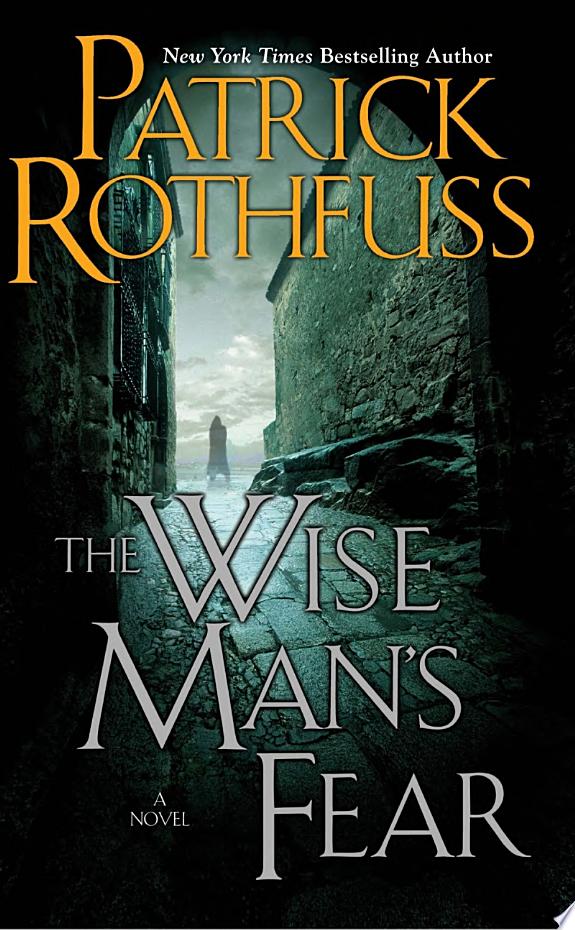
The Wise Man's Fear
Author: Patrick Rothfuss
E-KİTAPEPUB1.4 MBFREE
- Published
- 2011
- Language
- English
About This Book
Amazon.com Review The Wise Man's Fear continues the mesmerizing slow reveal of the story of Kvothe the Bloodless, an orphaned actor who became a fearsome hero before banishing himself to a tiny town in the middle of Newarre. The readers of Patrick Rothfuss's outstanding first book, The Wise Man's Fear makes up day two, and uncovers enough to satisfy readers and make them desperate for the full tale, from Kvothe's rapidly escalating feud with Ambrose to the shockingly brutal events that mark his transformation into a true warrior, and to his encounters with Felurian and the Adem. Rothfuss remains a remarkably adept and inventive storyteller, and Kvothe's is a riveting tale about a boy who becomes a man who becomes a hero and a killer, spinning his own mythology out of the ether until he traps himself within it. Drop everything and read these books. --Daphne Durham Author One-on-One: Patrick Rothfuss and Brandon Sanderson The Wise Man's Fear ) and Author Q&A with Patrick Rothfuss Q: Your first novel, The Name of the Wind introduces the hero (or some may say anti-hero) Kvothe as a larger-than-life living legend. A: I don't know if I'd call him larger-than-life. His reputation is larger-than-life, certainly. The man himself is remarkably life-sized. I think that's part of the reason people like him. Q: How did you create him? A: I got the idea for Kvothe after I finished reading Cyranno De Bergerac for the first time. I was completely knocked over by that character. He was passionate, arrogant, witty, clever, a fighter, a poet, a philosopher. He was compelling and interesting, and a bit of a bastard, but you loved him and felt sorry for him. I remember thinking, "Why haven't I ever read a fantasy novel with a character this good?" Shortly after that I read Casanova's memoirs. That's when I realized that autobiography could be really compelling so long as the person's life is exciting, and their personality is interesting. Those two things might not have been the seed for the book, they were certainly around when the seed was sprouting.... Q: What contemporary superhero would you put Kvothe up against? A: Batman. Q: Who would win? A: Ah hell. If we're talking about Kvothe as he appears in the second book. Batman would probably come out on top. I'd say Kvothe would only have about a 30% chance of pulling off the win there. But even if Batman did win, he'd walk away with a limp. Q: Kvothe leads readers through the entire series—from the storytelling, to the action, to the inner monologue. Are there any similarities between Kvothe and yourself? A: A few. But less than people typically think. People are always saying, "Why do you hate poets so much?" I have to remind them that Kvothe is the one with that particular grudge. But yeah. There are a few similarities. We both have the bad habit of expressing ourselves freely and clearly when it would be better to keep our mouths shut. Q: Fans love the books and are fascinated by the characters, but you’ve also garnered a cult-like following. Can you tell us what that’s like? A: I've got a cult? That's awesome. Do they have robes and stuff? Do we have baccanals? We better have baccanals. If I have cult it better old-school. Dionysian. Orgiastic. If I find out they're just drinking tang and handing out pamphlets on streetcorners I'm going to be pissed. Q: When did you realize that you wanted to become a writer? A: I’ve known I wanted to be a writer for a long time. Since forever. I started my first fantasy novel when I was 15 or so. It wasn’t very good, of course. In fact, it was horrible. Beyond horrible. It had cat-man samurai in it. I'm not even kidding. But it was a good learning experience. The mistakes I made in that novel taught me a lot about writing. Generally speaking, our failures teach us more than our successes. Part of the reason The Name of the Wind turned out so good is because I made so many rookie mistakes in that first, horrible novel. Q: Did any of your experiences in college influence some of the scenes at the University? A: No. Not really. You're making that whole Pat/Kvothe mistake again. He's the one with the red hair. I'm the one with the beard. A lot of people assume that because I spent 11 years in college, I based the University off my experiences as a student. It's a reasonable thought, but it couldn't be further from the truth. It wouldn't have taken me nearly so long to write this book I was just stealing things out of the real world. The truth is, I find stories that are thinly-veiled autobiography pretty tiresome. Authors inevitably put something of themselves into a book, but that doesn't mean you should turn your 3rd grade math teacher into a villain in a desperate attempt to get revenge. I've read books like that in the past. They're terrible. Q: What was the best class you took in all that time? A: Basic Critical Thinking. This is usually taught as a philosophy class at most universities, but in my opinion it should be required for e
Book Details
About the Author
Patrick Rothfuss is the author of "The Wise Man's Fear." Published by Penguin Group USA. Browse all books by this author on kitap.center.
All books by this authorReklam
Frequently Asked Questions
Amazon.com Review The Wise Man's Fear continues the mesmerizing slow reveal of the story of Kvothe the Bloodless, an orphaned actor who became a fearsome hero before banishing himself to a tiny town in the middle of Newarre. The readers of Patrick Rothfuss's outstanding first book, The Wise Man's...
The Wise Man's Fear — Free eBook
Download "The Wise Man's Fear" for free from kitap.center. This work is available in Magicians, Attempted assassination category.